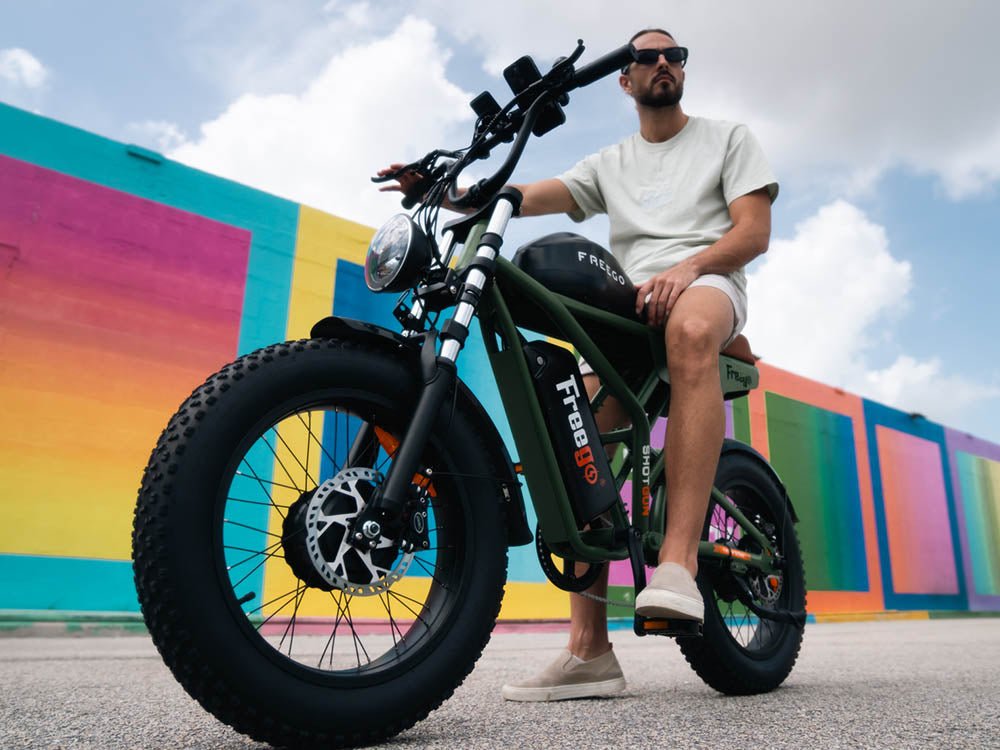
For a heavier rider, payload capacity is the first filter—not motor wattage. A powerful e-bike can still have a modest frame rating, while a lower-wattage model may be engineered to carry substantially more total weight. The safest buying process starts with the manufacturer's published payload, then checks rider-height fit, frame geometry, wheel strength, tire size, brakes, suspension and battery expectations under load.
One important distinction: published payload usually means rider plus cargo, accessories and anything else carried on the bike. A 400 lb payload rating does not automatically mean a 400 lb rider should use the bike. Leave room for clothing, locks, bags, racks, water and other carried weight, and follow the manufacturer’s fit guidance.
Best E-Bikes for Heavy Riders 2026: Quick Picks
- Best high-capacity dual-motor option: Freego Flash F3 Pro — 400 lb published maximum load.
- Best premium mid-drive option: Vanpowers Grand Teton Ultra — 400 lb published maximum load.
- Best high-torque fat tire workhorse: EUNORAU FAT-HD 2.0 — 375 lb published payload.
- Best family/cargo value option: HappyRun G70 — 330 lb published payload.
Browse the broader Electric Bikes collection or Fat Tire Bikes collection if you want more choices after narrowing your capacity needs.
1. Freego Flash F3 Pro — Best Dual-Motor High-Payload Pick
The Freego Flash F3 Pro publishes a 400 lb maximum load and combines that chassis rating with dual motors, 20 x 4-inch fat tires, hydraulic brakes and a large 48V 40Ah battery. WattWheelz currently lists it at $1,799.
For heavier riders, the 1,920Wh battery is especially relevant. More total system weight generally requires more energy to accelerate and climb. A large battery gives the rider more usable reserve than simply chasing a high peak-watt number.

Why the F3 Pro Works for Larger Riders
The F3 Pro's 400 lb published maximum load creates useful capacity headroom for many riders, while the wide tires and long seat format can feel stable at lower speeds. Its tradeoff is weight: this is not a light bike, and buyers should plan storage, transport and lifting before ordering.
2. Vanpowers Grand Teton Ultra — Best Premium Mid-Drive Pick
The Grand Teton Ultra also publishes a 400 lb maximum load, but it approaches the problem differently. It uses a mid-drive motor, torque sensing, 26 x 4-inch tires, four-piston hydraulic brakes and a more traditional mountain-bike riding position. Current WattWheelz price: $2,599.
This is the better choice for riders who want a pedal-forward experience, trail-oriented components and a lower center-of-bike motor position rather than a moto-style dual-hub platform.

Why Mid-Drive Can Help Under Load
A mid-drive sends motor power through the bicycle drivetrain. On steep grades, the rider can shift to a lower gear so the motor does not have to pull the entire load at a poor wheel-speed ratio. That can make climbing feel more controlled. It also means the chain and cassette experience more load, so drivetrain maintenance matters.
3. EUNORAU FAT-HD 2.0 — Best High-Torque Fat Tire Workhorse
The EUNORAU FAT-HD 2.0 / Hunter X7 publishes a 375 lb total payload, a 1,000W BAFANG mid-drive and 160 Nm of torque. WattWheelz currently lists it at $2,799.
That makes it a strong option for larger riders who also need hills, trails, hunting access or heavier-duty utility. The 26 x 4-inch tires increase tire volume and contact patch, while the mid-drive architecture helps on steep grades.

Why the FAT-HD 2.0 Is More Than a Payload Number
The strongest part of this platform is the combination of payload, motor torque and full-size wheels. A heavy rider does not benefit from a high frame rating if braking, climbing or fit are poor. The FAT-HD 2.0's package is more balanced than a bike that simply advertises a large number with entry-level components.
4. HappyRun G70 — Best Cargo and Family Value Pick
The HappyRun G70 publishes a 330 lb payload capacity, 20 x 4-inch tires, hydraulic brakes and a dual-battery setup. Current WattWheelz price: $1,299.
Its reason for being here is versatility. Riders who need one bike for personal transportation plus groceries, bags or an approved passenger setup may value the rear utility format more than maximum trail performance.

How Much Payload Do You Actually Need?
Add the rider, typical clothing, lock, water, tools, bags, racks and routine cargo. Then leave reasonable margin instead of planning to operate at the published maximum every ride. A manufacturer payload is an upper system limit, not a recommended everyday target.
For example, a 300 lb rider carrying a 15 lb backpack, 8 lb lock and 10 lb of accessories is already at 333 lb before groceries or other cargo. That arithmetic matters more than marketing language.
Payload Capacity vs Rider Weight
These terms are often confused. Payload is usually the combined carried weight supported by the bike. Rider weight is only one part of that. Some manufacturers also publish separate rack or passenger limits. Those separate component limits still apply even when the total bike payload is higher.
This is why a cargo bike with a 450 lb published total payload should not automatically be interpreted as supporting a 450 lb rider. Our HOVSCO HovCart review explains the distinction in a cargo-bike context.
Fit Matters as Much as Capacity
A rider can be within the weight limit and still be a poor fit if the cockpit is too short, the seat cannot be adjusted correctly or the handlebar position creates discomfort. Check published rider-height guidance, seat-height range, reach, step-over and frame size. Larger riders should also consider shoulder width, saddle support and handlebar sweep.
Why Brakes Matter More With More System Weight
More mass requires more braking energy to slow down. Hydraulic disc brakes are generally preferable on high-payload e-bikes because they can offer strong modulation with less hand effort. Rotor diameter, pad condition and tire grip also matter.
Heavier riders should inspect brake pads and tire condition regularly rather than assuming the original service interval fits every use case.
Why Tires and Wheels Matter
Fat tires can add comfort and stability, but width alone does not determine capacity. Wheel construction, spoke tension, rim quality and tire-pressure range all affect how the bike carries load. Follow the manufacturer's tire-pressure guidance and avoid underinflating solely for comfort when the bike is heavily loaded.
Suspension Setup for Heavier Riders
Suspension can improve comfort and control, but it should be adjusted for rider weight when the hardware allows it. Air forks and shocks may provide more tuning range than basic coil systems. Excessive sag can reduce travel and alter handling, while overly stiff settings can hurt traction and comfort.
Motor Power: How Much Is Enough?
More power helps acceleration and hills, but it does not change the frame's payload rating. For a heavier rider on flat pavement, a moderate motor with good gearing may be enough. For steep terrain, a high-torque mid-drive or a strong hub system may be more appropriate.
If terrain is also part of your decision, compare the architectures in AWD vs Mid-Drive E-Bikes.
Battery Range for Heavy Riders
Published range is usually measured under controlled or favorable conditions. Higher total weight increases energy use during acceleration and climbing. Wind, tire pressure, cold temperatures, high assist and throttle use can reduce range further.
For heavier riders, battery watt-hours deserve more attention than the marketing maximum. Build your route plan around conservative range with reserve rather than the highest published number.
Are Fat Tire E-Bikes Better for Heavy Riders?
They can be a good fit because wide tires add volume, stability and comfort, but a fat tire does not increase the frame rating by itself. Use the published payload and complete component package as the deciding criteria. Our Best Fat Tire E-Bikes 2026 guide compares several current high-capacity options.
Step-Through vs High-Step for Larger Riders
A step-through frame can make mounting easier, particularly for riders with limited hip mobility or when carrying cargo. A high-step design may offer a traditional frame feel and more triangle space. Neither format is automatically stronger; use the manufacturer's published capacity rather than assuming frame shape determines rating.
What Heavier Riders Should Check Before Ordering
- Total published payload and what it includes.
- Separate rear-rack or passenger limits.
- Published rider-height or frame-size guidance.
- Brake type and rotor size.
- Tire size and approved pressure range.
- Wheel and spoke condition.
- Battery watt-hours and conservative range expectations.
- Bike weight and whether your rack or vehicle can transport it.
- Suspension adjustability.
- Local e-bike class and access rules.
Frequently Asked Questions
What is the best e-bike for a 300 lb rider?
Look for a bike whose published total payload leaves room above 300 lb for clothing, locks and cargo, then confirm rider-height fit. Models in the 375–400 lb payload range can provide more headroom.
Can a 350 lb rider use a 350 lb payload e-bike?
That would leave no room for accessories or cargo and may not be appropriate. Payload usually includes everything carried on the bike, so extra headroom is preferable.
Are fat tire e-bikes better for heavier riders?
They can improve comfort and stability, but the published frame payload, wheels, brakes and fit matter more than tire width alone.
Is a mid-drive better for a heavy rider?
It can be useful on steep hills because the motor can use the bicycle's gears. On flat routes, a well-sized hub-motor system can also work well.
Do heavier riders get less range?
Usually, all else equal. More mass requires more energy during acceleration and climbing, so real-world range may be lower than a manufacturer's maximum estimate.
Do I need hydraulic brakes?
They are a strong choice on heavier systems because they generally provide better modulation and lower lever effort than basic mechanical brakes when properly maintained.
What payload rating should I look for?
Add rider weight plus routine cargo and accessories, then choose a bike with reasonable capacity margin above that total.
Does bike weight count toward payload?
Payload usually refers to carried weight rather than the bike's own weight, but always follow the specific manufacturer definition for the model.
Are cargo bikes good for heavier riders?
Some have high published payloads, but separate rack/passenger limits and rider-fit guidance still apply. Do not treat cargo capacity as rider capacity without checking the manufacturer specification.
Where can I compare high-payload e-bikes?
Start with WattWheelz's Electric Bikes and Fat Tire Bikes collections, then filter by payload, fit and terrain requirements.
Sources & Verification
Published payloads and model specifications are reconciled against current WattWheelz product listings and current manufacturer information. Payload generally includes rider plus cargo, but definitions and component-specific limits can vary by manufacturer. Buyers should verify current specifications before purchase.