Short answer: the best electric dirt bike is not automatically the one with the largest peak-watt number. For an adult off-road buyer, the useful decision comes down to five things working together: motor and controller output, battery energy, chassis and suspension, braking, and the kind of terrain you actually ride. A 48V lightweight machine, a 60V trail bike and a 72V high-performance e-moto can all be the right choice for different riders.
This 2026 buying guide explains how to compare electric dirt bikes without getting trapped by headline specifications. If you are ready to shop, start with WattWheelz's Dirt E-Bikes collection and the more focused Best Electric Dirt Bikes for Adults collection.
Electric Dirt Bike Buying Guide 2026: Quick Decision Framework
| Priority | What to look at | Why it matters |
|---|---|---|
| Manageable fun | Weight, seat height, smooth power delivery | A bike you can control is more useful than power you cannot comfortably use. |
| Trail performance | Suspension travel, wheel setup, brakes, torque delivery | Rough terrain exposes chassis and braking limits quickly. |
| Speed / acceleration | Motor, controller, battery voltage, current capability, gearing | Peak watts alone do not describe how a bike accelerates or sustains power. |
| Longer rides | Battery watt-hours, efficiency, riding speed, recharge time | Published range can change dramatically with speed and terrain. |
| Ownership | Parts support, warranty, freight, battery replacement, dealer support | A high-performance bike is a system you will maintain, not a one-time spec sheet. |
First Decide: E-Bike, Dirt E-Bike or Electric Moto?
The market uses these terms loosely. Some models retain functional pedals and can operate in a limited road-oriented mode, while others are effectively compact electric motorcycles intended for private-property or off-road use. That distinction affects where you can legally ride, how the bike is equipped and what kind of performance is reasonable to expect.
Do not assume a product is road legal because it has pedals, lights or an "e-bike" label. High-power models can exceed conventional Class 1, Class 2 and Class 3 limits. Check the rules for your state, city and the specific trail or riding area before you buy.
1. Motor Power: Nominal Watts vs Peak Watts
Peak motor power is one of the most abused comparison numbers in the category. Peak output describes a short-duration maximum under defined conditions; nominal or continuous output is the better clue to what a system can sustain. The controller, battery BMS, motor temperature and gearing all influence what reaches the rear wheel.
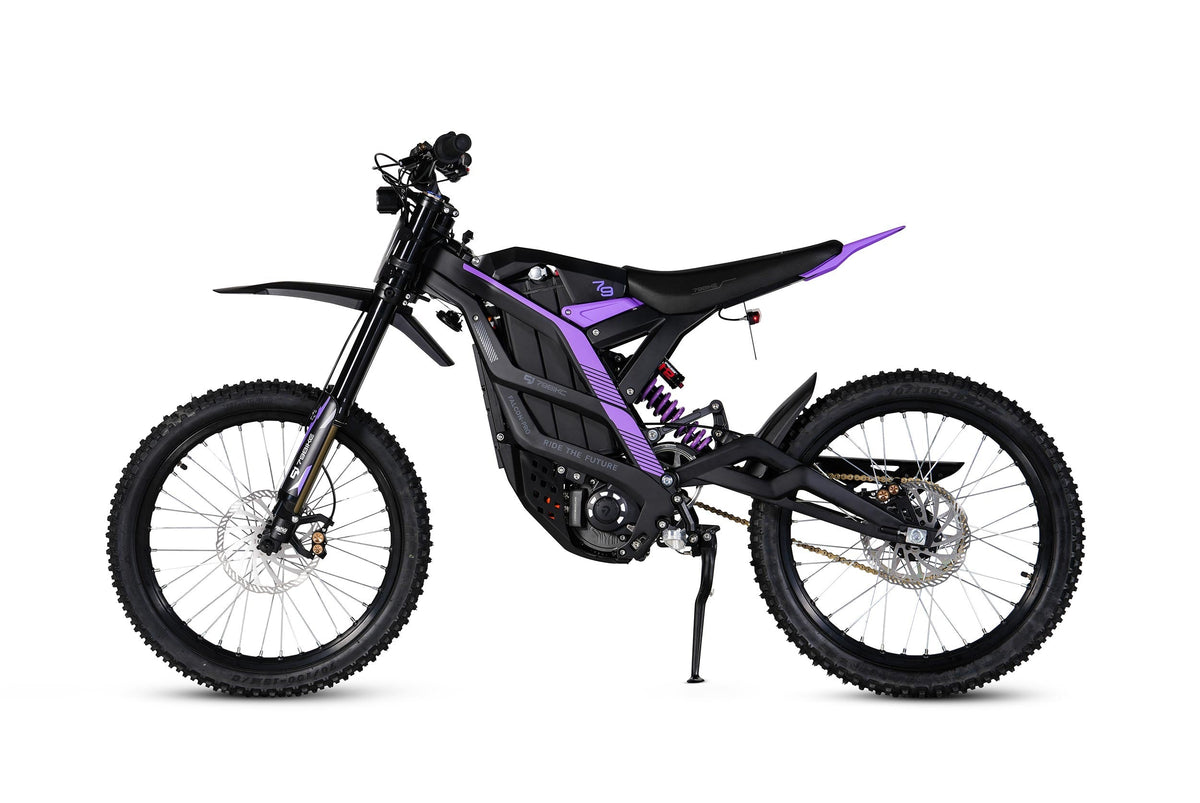
For example, WattWheelz currently carries the 79Bike Viper S as a lighter 48V platform, while the HappyRun G18 Pro steps into a 60V / 4,500W-peak class. Higher up, the 79Bike Falcon Pro is a 72V / 10,000W-peak machine. Those are different system architectures, not simply three versions of the same bike.

2. Battery Voltage: 48V, 60V and 72V Are Not a Ranking System
Higher voltage can support higher power while requiring less current for the same wattage, which can reduce electrical losses in parts of the system. But voltage alone does not determine top speed, torque or range. A strong 60V design can outperform a poorly matched 72V design.
If voltage is one of your main questions, read our dedicated 60V vs 72V guide once it is published. In the meantime, compare complete systems: battery voltage, amp-hour capacity, controller, motor rating, gearing, weight and intended use.
3. Battery Capacity: Convert Volts and Amp-Hours Into Energy
A quick way to compare battery size is nominal watt-hours: volts × amp-hours. A 60V 35Ah pack is roughly 2,100Wh; a 72V 35Ah pack is roughly 2,520Wh. That does not mean every watt-hour is usable or that two bikes with equal energy will travel the same distance, but it is more informative than amp-hours by themselves.
The Freego X2 Pro uses a published 60V 30Ah battery, while the HappyRun G300 Pro uses a 72V 30Ah battery. The same 30Ah number represents different nominal energy because the voltages differ.

4. Range Claims: Ask How the Range Was Measured
Published range is not a standardized laboratory number across the industry. A manufacturer may test at low speed, on flat pavement, with a light rider and a specific mode. An aggressive off-road rider using high power can see substantially less.
When planning a ride, build reserve into the trip. Terrain, rider weight, tire pressure, temperature, acceleration and sustained speed all affect consumption. A 70-mile headline figure should not be treated as 70 miles of full-power trail riding.
5. Torque and Gearing Matter More Than a Giant Watt Number on Technical Terrain
Technical climbing needs controllable wheel torque, not only speed. Mid-mounted electric-moto drivetrains, reduction systems and sprocket choices can change how power reaches the rear tire. The same peak motor rating can feel very different on two bikes because the gearing, wheel diameter and controller tuning are different.
The EUNORAU Rerode R1, for example, is published with an 8,000W peak mid-system and a 72V 35Ah battery. The Falcon Pro is published at 10,000W peak with its own 72V 35Ah setup. The useful comparison is not just 8,000 vs 10,000; it is how each complete chassis delivers that power for your terrain.

6. Suspension: The Chassis Decides Whether the Power Is Usable
A high-power dirt bike with weak suspension can be tiring, unstable and difficult to control. Look at front and rear travel, adjustability, spring rate or air setup, linkage design and whether the suspension is matched to the rider's weight and speed.
Riders who hit rough trails, braking bumps, jumps or higher-speed terrain should put suspension near the top of the list. Casual property riding and smooth trails can tolerate simpler components.
7. Brakes: Speed Requires Real Stopping Power
As speed and weight rise, braking becomes more important. Four-piston hydraulic brakes and larger rotors are common on higher-performance e-moto platforms because they provide more control and heat capacity than basic bicycle brakes.
Brake feel also matters. A system that is powerful but easy to modulate helps you manage loose surfaces more predictably than an on/off-feeling setup.
8. Bike Weight Changes Everything
Weight affects loading, low-speed handling, pickup after a fall, jumping, trail recovery and transport. A heavier bike can feel planted at speed and may carry a larger battery, but it can be harder to maneuver in tight terrain.
This is why a lower-power lightweight bike may be the smarter first purchase for a newer rider. The Viper S is positioned as a lighter, more approachable option, while 72V machines such as the Falcon Pro and Rerode R1 are much more substantial.
9. Wheel Size, Tire Choice and Ground Clearance
Wheel diameter influences rollover, steering response, seat height and gearing. Common electric-dirt-bike setups include 19/19, 19/17, 19/18 and other staggered combinations. A larger front wheel generally rolls over obstacles more easily, while a smaller rear can help traction and maneuverability.
Tire compound and tread can matter more than an inch of wheel diameter. Match the tire to your surface: hardpack, sand, mud, rocks and mixed trails create different demands.
10. Rider Fit: Seat Height Is Only the Beginning
Check seat height, handlebar position, peg placement, bike width and total weight. Two riders of the same height can have different inseams and comfort preferences. A bike that feels intimidating at a stop can reduce confidence even if the spec sheet looks perfect.
For adult buyers, pay attention to maximum load too. Payload is not just rider weight; it can include gear depending on the manufacturer's definition.
11. Controllers and Ride Modes Shape the Experience
The controller determines how battery power is delivered to the motor. Current limits, throttle mapping, regenerative braking and selectable modes can make a high-output bike feel smooth or abrupt.
A beginner may benefit from selectable lower-power modes. An experienced rider may care more about response, regen adjustment and sustained output.
12. Charging Time and Battery Removability
Charging becomes a real ownership factor when battery packs approach 2–3kWh. A larger-capacity charger can shorten turnaround time, but the battery and BMS must be designed for that charge rate. Follow the manufacturer's charger guidance instead of substituting an unapproved charger.
A removable battery can make indoor charging or battery storage easier. A fixed or difficult-to-remove pack may be fine if you have a garage outlet near the bike.
13. Compare Current Models by Rider Type, Not Just Specs
| Model | Published system | Best fit in this guide | Current WattWheelz price |
|---|---|---|---|
| 79Bike Viper S | 48V 25Ah / 3,500W motor | Lighter, more approachable off-road platform | $1,399 |
| HappyRun G18 Pro | 60V 35Ah / 4,500W peak | Value-focused 60V trail riding | $1,189 |
| Freego X2 Pro | 60V 30Ah / 6,000W peak off-road mode | Dual-mode versatility | $2,099 |
| HappyRun G300 Pro | 72V 30Ah / 6,500W peak | 72V performance at a mid-market price | $1,899 |
| EUNORAU Rerode R1 | 72V 35Ah / 8,000W peak | Premium mid-system trail performance | $3,750 |
| 79Bike Falcon Pro | 72V 35Ah / 10,000W peak | High-performance e-moto buyer | $3,799 |

14. Where the 79Bike Falcon Pro Fits
The Falcon Pro is for the buyer who already knows they want a high-performance 72V electric dirt bike rather than a conventional pedal-first e-bike. 79Bike publishes a 72V 35Ah LG battery, 10kW peak power, up to 56 mph, FastAce suspension and a 19/19 off-road wheel package.
For a deeper model-specific analysis, read the 79Bike Falcon Pro review, the Falcon Pro vs Sur-Ron Light Bee X comparison, and the Rerode R1+ vs Falcon Pro comparison.
15. Where 60V Bikes Still Make Excellent Sense
A 60V bike can offer serious off-road performance while keeping cost, battery size or system weight below many 72V machines. The G18 Pro is published at up to 38 mph, while the X2 Pro's off-road mode is published at up to 50 mph. Those two examples alone show why voltage cannot be used as a top-speed shortcut.
Buy the complete platform, not the voltage sticker.

16. Legal Access: High Power Changes Where You Can Ride
Many high-power electric dirt bikes are intended for off-road use and may not qualify as Class 1, 2 or 3 e-bikes. Public trails can have separate motorized-use rules, and private riding parks may have their own requirements. Verify access before assuming you can use a high-output e-moto anywhere a bicycle is allowed.
For terrain-specific buying logic, our best electric bikes for hunting guide also explains why trail rules, traction and range reserve can matter more than peak output.
17. Freight, Assembly and Ownership Costs
Some electric dirt bikes ship by parcel; larger models may ship by freight. Check whether freight is included, charged separately or calculated at checkout. Also plan for routine wear items such as tires, brake pads, chains, sprockets and suspension service.
Battery replacement is the largest long-term component expense on many electric vehicles. Warranty terms, parts availability and dealer support should be included in your decision.
18. Which Electric Dirt Bike Should You Buy?
Choose a lighter 48V or moderate-output 60V bike if control, budget and approachability matter more than maximum speed. Choose a stronger 60V system if you want serious trail performance without automatically moving to the largest platform. Choose a 72V high-performance bike when you specifically want higher-output acceleration, larger energy capacity and e-moto-level performance—and are comfortable with the extra weight, cost and off-road focus that often comes with it.
To compare the current catalog, browse Dirt E-Bikes, Best Electric Dirt Bikes for Adults, and the 79Bike collection. For the 79Bike lineup specifically, see our Best 79Bike Electric Bikes of 2026 guide.
Electric Dirt Bike FAQ
How much power does an electric dirt bike need?
There is no universal minimum. A lighter 3–4kW platform can be more than enough for casual off-road riding, while experienced riders may prefer 6–10kW or more. Match output to skill, terrain, weight and intended speed.
Is 72V better than 60V?
Not automatically. 72V can support higher power efficiently, but motor, controller, battery current, gearing, weight and tuning determine real performance.
How do I compare battery sizes?
Use nominal watt-hours as a first pass: voltage multiplied by amp-hours. Then consider how efficiently the bike uses that energy.
Can I trust the published range?
Treat it as a manufacturer reference under specific test conditions, not a guarantee. High speed, hills, soft terrain, cold weather and rider weight reduce range.
Are electric dirt bikes street legal?
Some limited configurations may qualify under local e-bike rules, but many high-power models do not. Check state and local rules for the exact configuration.
What is more important: watts or torque?
Both matter, along with gearing and controller behavior. Watts describe power; wheel torque and gearing strongly influence low-speed climbing and acceleration.
Do I need full suspension?
For rough, higher-speed trail riding, full suspension is usually worth prioritizing. Smooth property riding may not require the same level of component travel or adjustability.
What brakes should a fast electric dirt bike have?
Higher-speed and heavier models benefit from strong hydraulic brakes, often with four-piston calipers and larger rotors. Brake condition and setup matter as much as the label.
Should a beginner buy a 10kW electric dirt bike?
Usually not simply because it is available. Newer riders are often better served by manageable weight, predictable power and selectable low-power modes.
What should I check before ordering?
Verify rider fit, intended riding area, current product specifications, battery and charger details, shipping method, warranty, return terms and whether replacement parts are available.
Sources & Verification
- 79Bike manufacturer specifications for Falcon Pro: 79bike.com.
- WattWheelz live product and collection pages were used for current catalog position, price placeholders and dealer availability.
- Manufacturer-published performance and range figures are treated as claims, not independent WattWheelz test results.