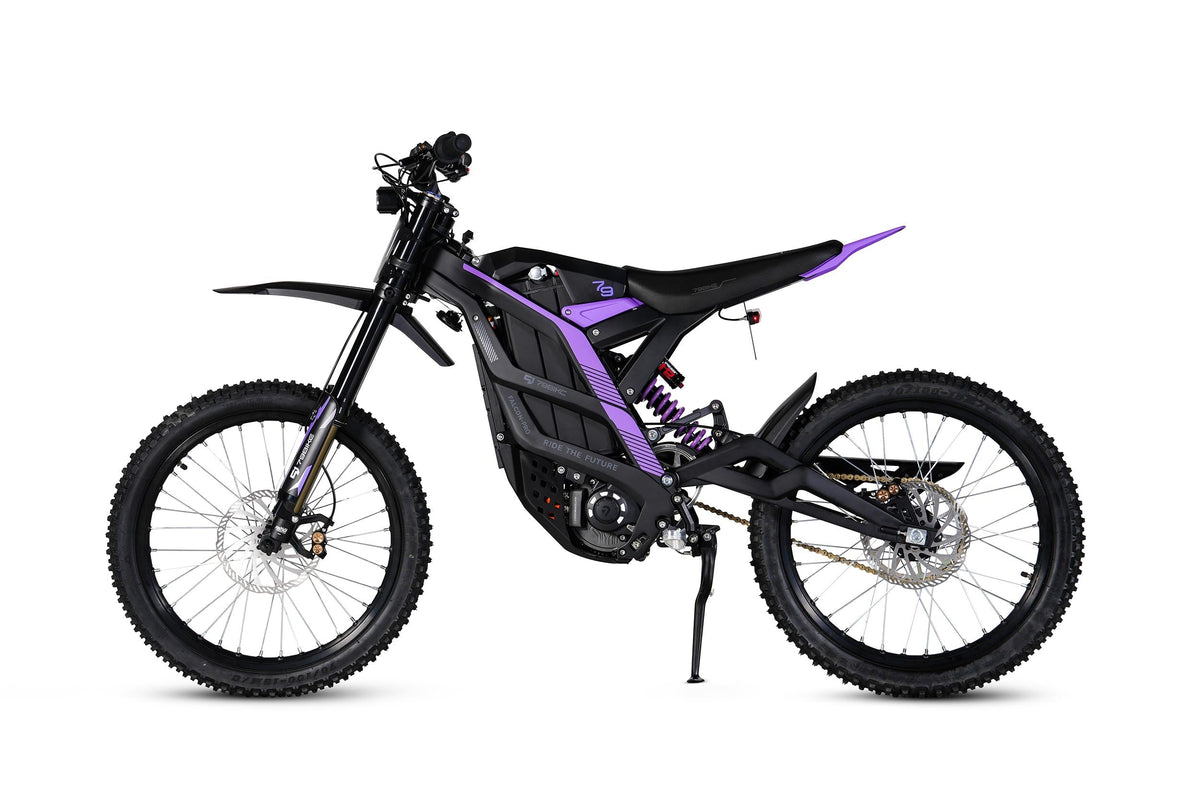
The 79Bike Falcon Pro and Talaria Sting R MX4 sit in the same conversation for a simple reason: both target riders who want a lightweight electric moto that feels far more serious than a conventional pedal-assist e-bike. They reach that goal differently. The Falcon Pro leans on a 72V architecture and a high peak-output claim, while the Talaria Sting R MX4 is a well-known 60V platform whose official specifications demonstrate why voltage alone cannot decide a winner.
This comparison is buyer-first. We will separate verified platform specifications from marketing shorthand, explain which rider each bike fits, and show where the 79Bike Falcon Pro makes the strongest case. For broader context, read our electric dirt bike buying guide and 60V vs 72V guide.
79Bike Falcon Pro vs Talaria Sting R MX4 at a glance
The headline difference is architecture: Falcon Pro uses a 72V battery system and WattWheelz lists it as a high-output electric dirt bike; Talaria's Sting R MX4 platform uses a 60V system and Talaria publishes peak power around the 8 kW class. Those numbers are useful, but they should be read with battery energy, weight, suspension, brakes, wheel setup and controller tuning.

Why this comparison is not simply 72V vs 60V
A larger nominal voltage does not automatically mean a bike accelerates harder or reaches a higher speed. Electrical power depends on voltage and current, while real vehicle performance depends on the complete system. This is exactly why the Talaria remains competitive despite a smaller voltage number.
Power delivery
The Falcon Pro's appeal is its high-output positioning and aggressive electric-moto character. The Talaria Sting R MX4 built its reputation around a responsive drivetrain and strong power-to-weight feel. Buyers should compare verified peak output, continuous behavior and riding modes rather than assuming that a single peak watt number describes every part of a ride.
Battery architecture
The Falcon Pro's 72V architecture gives the platform electrical headroom for a high-output tune. Talaria's 60V architecture proves that a lower nominal voltage can still power a very fast lightweight machine when controller, motor and battery are properly matched.
Battery energy and range
Range should be compared using watt-hours and riding conditions, not voltage. Hard acceleration, high speed, sand, mud, climbs and rider weight can shrink range dramatically. If one bike has more usable battery energy, that can matter more to a long trail day than the nominal voltage itself.
Top speed claims
Top-speed figures deserve context. Tire size, gearing, rider weight, state of charge, controller programming and test conditions affect results. Treat manufacturer figures as reference points, not guarantees of what every rider will see on every surface.
Acceleration and throttle feel
For many buyers, throttle mapping matters as much as absolute peak output. A smooth low-speed map is easier to manage on technical terrain; an aggressive map can feel exciting in open areas. Review available ride modes and how predictably each bike responds from a stop.
Weight and handling
Lightweight electric motos are attractive because they can feel more agile than full-size motorcycles. A few pounds can matter when changing direction, lifting the bike, loading a truck or correcting a line on tight trails. Compare ready-to-ride weight, not only frame material or advertised dry weight.
Suspension
Suspension quality determines whether power can be used confidently. Look at fork and shock adjustability, travel, spring suitability for your weight and parts support. Riders who jump, ride fast chop or tackle rocky terrain should put suspension near the top of the decision list.

Brakes
Higher speeds raise the importance of brake feel, rotor size, heat management and replacement-pad availability. A faster bike is only more useful if its braking system and tires can repeatedly control that speed.
Wheel and tire setup
Wheel size affects rollover, agility and tire availability. Before choosing either platform, check the exact wheel configuration of the variant you are buying. Riders who plan to change tires should verify compatible sizes and whether their intended off-road tire is readily available.
Chassis and rider fit
Seat height, peg position, handlebar reach and chassis dimensions determine whether a bike feels natural. A spec-sheet winner can be the wrong purchase if the rider feels cramped or cannot confidently manage the bike at low speed.
Falcon Pro strengths
The Falcon Pro is compelling for a buyer who specifically wants a 72V performance platform, strong peak-output positioning, a modern lightweight electric-moto format and U.S. dealer access through WattWheelz. It also fits naturally into the broader 79Bike lineup.
Talaria Sting R MX4 strengths
The Talaria Sting R MX4 has a large owner community, extensive third-party knowledge and a proven platform reputation. That ecosystem can matter for riders who value modification knowledge, community troubleshooting and a long history of real-world use.
Where Falcon Pro can be the better buy
Falcon Pro makes the most sense when the buyer values its 72V architecture, output target and current dealer purchase path. The decision becomes stronger when the stock package already contains the performance and component mix the rider wants, reducing the need to modify a new bike immediately.
Where Talaria can be the better buy
Talaria can be attractive to riders who prioritize the mature owner ecosystem, familiarity of the platform and a broad aftermarket. Availability, support and local service access should be checked before deciding.
Do not overlook dealer support
High-performance electric motos are not disposable products. Warranty process, parts availability and a dealer that can help resolve order or product issues have real value. WattWheelz's electric dirt bike collection lets shoppers compare several supported options in one place.
How Falcon Pro compares to other 79Bike options
Before choosing the Pro solely because it sits high in the lineup, compare it with other 79Bike models and your actual terrain. Our best 79Bike electric bikes guide helps map the lineup, while the Falcon Pro review goes deeper on the model itself.

Falcon Pro vs alternatives inside WattWheelz
You may also want to compare the Falcon Pro with the EUNORAU Rerode R1 and other bikes in the electric dirt bikes for adults collection. Our EUNORAU R1 Plus vs Falcon Pro comparison is useful when you want a second point of reference.
Performance upgrades: stock first, modify later
A common mistake is buying a bike based on the upgrade list you plan to install. First decide whether the stock brakes, suspension, battery, power and ergonomics already meet your needs. Modifications can affect reliability, warranty coverage, range and safety.
Street legality and registration
Neither high-performance electric moto should be assumed to qualify as an ordinary Class 1, 2 or 3 e-bike simply because it is electric. Rules differ by state and locality, and off-road-focused machines can face motorcycle, moped or OHV requirements. Verify local law before riding on public roads or trails.
Who should buy the Falcon Pro?
Choose Falcon Pro if you want a high-performance 72V lightweight electric moto, prefer its stock component package, want dealer-backed access through WattWheelz and do not need the Talaria ecosystem to justify the purchase.
Who should buy the Talaria Sting R MX4?
Choose the Talaria if its proven 60V platform, owner community, aftermarket depth and specific chassis feel better match your priorities. The fact that it is 60V should not disqualify it.
Which bike wins?
There is no universal winner. For a WattWheelz shopper who wants the stronger direct path to a current 72V platform, the Falcon Pro is the more natural recommendation. For a rider whose priority is the Talaria ecosystem and familiar platform, the MX4 can still be the better fit. The correct decision is based on complete-bike value, not the voltage badge.
79Bike Falcon Pro vs Talaria Sting R MX4 FAQ
Is the Falcon Pro 72V?
Yes, the current Falcon Pro platform sold by WattWheelz uses a 72V battery architecture. Verify the exact live variant specifications before ordering.
Is the Talaria Sting R MX4 60V?
Talaria publishes the Sting R MX4 platform around a 60V battery architecture.
Does 72V make the Falcon Pro automatically faster?
No. Voltage alone does not determine top speed; motor, controller, gearing, software, weight and conditions also matter.
Which bike has more peak power?
Compare the current manufacturer figures for the exact variant. Peak ratings can be measured or advertised differently and should not be treated as sustained power.
Which has better range?
Compare usable battery energy and test conditions. Aggressive riding can reduce both bikes' real-world range substantially.
Which is better for jumps?
That depends on rider weight, suspension setup, chassis condition and skill. Do not choose from motor power alone.
Which is easier to modify?
Talaria has a mature aftermarket and large owner community. 79Bike aftermarket support is developing; check current parts availability for the modifications you care about.
Can either bike be ridden on public roads?
Do not assume so. High-performance electric motos can fall outside standard e-bike classifications. Check your state and local requirements.
Where can I buy the Falcon Pro?
You can view current availability and pricing on the WattWheelz Falcon Pro product page.
What should I compare before ordering?
Verify current price, battery, power, wheel setup, brakes, suspension, dimensions, warranty terms, shipping, replacement parts and legal use.


Bottom line
The Falcon Pro vs Talaria MX4 decision is a good example of why electric dirt bike shopping must move beyond one headline specification. The Falcon Pro's 72V performance architecture is compelling, while the Talaria's 60V system shows that excellent power can be engineered at a lower nominal voltage. Buy the platform whose complete package, support and riding character fit you best.
Where This Comparison Fits in the Buying Journey
Before choosing between these platforms, use our electric dirt bike buying guide to define the right power, battery and chassis priorities. Our 60V vs 72V electric dirt bike guide explains why system voltage alone does not decide performance, while the electric bikes for hunting guide adds another demanding off-road use case for context.
Sources & Verification
Platform specifications were cross-checked against current manufacturer information and WattWheelz product data available during preparation. Because manufacturers may revise components, firmware, batteries or listed performance, verify the exact live configuration before purchase. WattWheelz pricing and availability should be confirmed on the linked product page.