Electric dirt bike shoppers often treat battery voltage like a horsepower badge: if 72V is a bigger number than 60V, the 72V bike must be faster, stronger and better. That shortcut is useful only up to a point. Voltage affects the electrical system's performance ceiling, but the bike you feel on the trail is the result of voltage, controller current, motor design, battery capacity, gearing, cooling, total weight and software working together.
This guide explains what 60V and 72V actually change, what they do not change, and how to choose between them. If you are still deciding which kind of electric dirt bike fits you, start with our 2026 electric dirt bike buying guide and browse the WattWheelz dirt e-bike collection.
60V vs 72V electric dirt bikes: the short answer
A 72V system can support more power at the same current because electrical power is approximately voltage multiplied by current. But that does not mean every 72V bike is more powerful than every 60V bike. A well-engineered 60V platform with a high-output controller and motor can outperform a conservatively tuned 72V platform. Compare complete systems, not battery labels.
What battery voltage actually means
Voltage is electrical potential. In an electric dirt bike it is one part of the relationship between the battery, controller and motor. Higher voltage can help a system deliver a given amount of power with less current, or give engineers room to target more peak power without raising current proportionally.
Why watts matter alongside volts
Watts describe power. A simplified electrical relationship is watts = volts × amps. That means a 60V system at higher current can deliver more electrical power than a 72V system at lower current. Manufacturer peak-power claims also depend on how long that output can be sustained, so peak watts should not be treated as continuous trail performance.
A real-world reason not to judge voltage alone
The Talaria Sting R MX platform is an important example: Talaria publishes a 60V architecture with strong peak output, while other 60V and 72V machines occupy a wide range of performance levels. WattWheelz also carries 60V models such as the Freego X2 Pro. The lesson is simple: voltage is a system characteristic, not a standalone performance ranking.

How controller current changes the picture
The controller decides how much current reaches the motor and under what conditions. Two bikes can use batteries with the same nominal voltage while feeling completely different because their controller limits, throttle mapping and thermal protection differ. A strong controller can create aggressive acceleration; a conservative tune can prioritize range, smoothness and component life.
60V systems: where they make sense
A 60V system can be a strong fit for riders who want performance without automatically moving into the heaviest or most extreme power class. Depending on the bike, 60V can offer a useful balance of acceleration, range, battery size, charging demands and overall vehicle weight.
72V systems: where they make sense
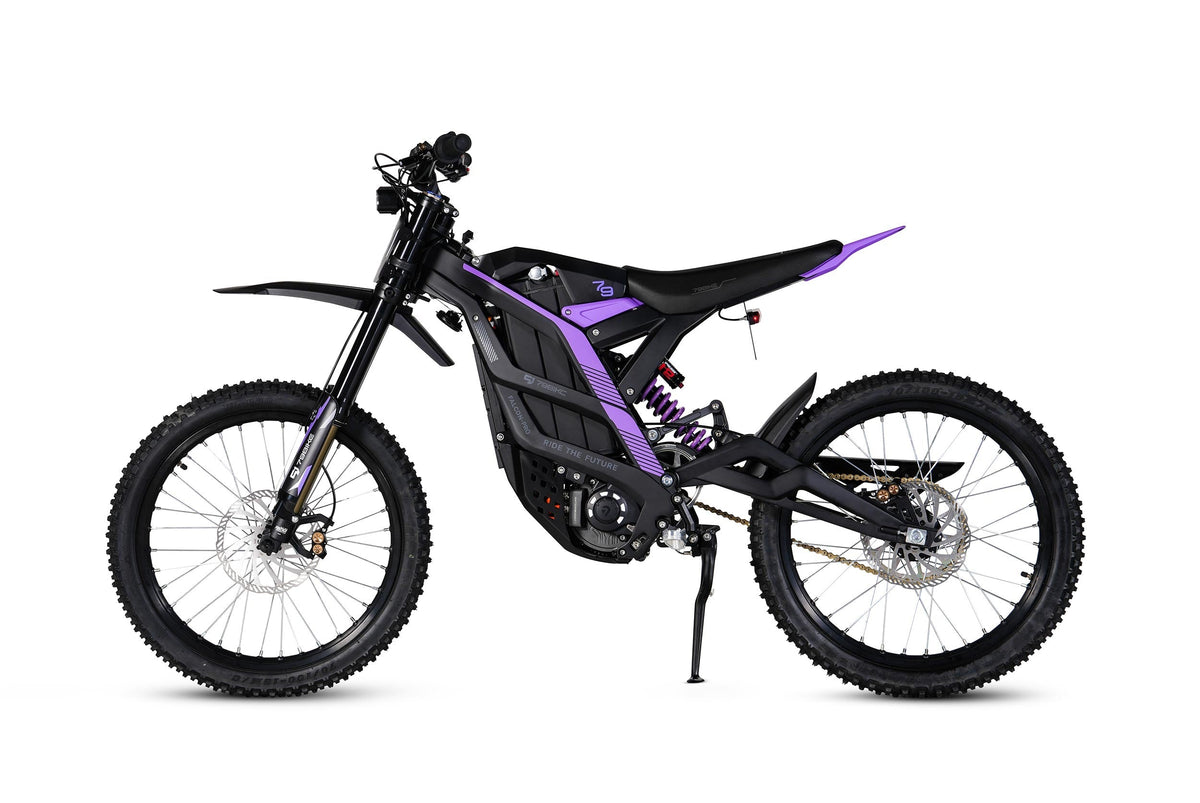
A 72V system gives designers more voltage headroom and is common on higher-output electric motos. That can be useful when the whole bike—controller, motor, battery discharge capability, brakes, chassis and suspension—is built around higher performance. The 79Bike Falcon Pro is one current WattWheelz example of a 72V high-performance platform.

Acceleration: 60V vs 72V
Initial acceleration depends heavily on torque delivery and controller tuning. A 72V label does not guarantee a harder launch. Look at peak motor output, controller limits, bike weight, wheel size, gearing and rider reviews or verified performance data. A lighter 60V machine may feel more immediate than a heavier 72V machine with softer mapping.
Top speed: does 72V automatically win?
No. Higher voltage can support higher motor speed in an appropriately designed system, but top speed is constrained by motor winding, gearing, wheel diameter, controller programming, aerodynamic drag and software limits. Compare the manufacturer's stated top-speed specification for the complete bike rather than inferring speed from voltage.
Range: voltage is not battery capacity
Range is more closely connected to stored energy in watt-hours than voltage by itself. Battery energy is roughly volts × amp-hours. A 60V battery with more amp-hours may contain more energy than a small 72V battery. Terrain, rider weight, tire pressure, speed and throttle use can dominate real-world range.
Compare watt-hours before comparing range
Suppose one pack is 60V × 40Ah and another is 72V × 30Ah. The first is about 2,400Wh; the second about 2,160Wh using nominal arithmetic. That does not prove the first bike will travel farther, but it shows why voltage alone tells you very little about stored energy.
Battery sag and sustained performance
Under hard load, battery voltage drops temporarily. Cell quality, pack design, state of charge, temperature and discharge rate influence that sag. A high-quality battery and conservative thermal strategy can preserve performance deeper into a ride better than a poorly matched system with a larger headline voltage.
Heat and efficiency
Higher current produces more resistive losses, which is one reason higher-voltage architectures can be attractive for high-power designs. But system efficiency still depends on controller quality, motor efficiency, cooling and operating point. You cannot determine heat management from voltage alone.
Weight and packaging
More energy generally means more cells and more weight, although cell chemistry and packaging matter. High-output 72V bikes often pair larger batteries with stronger frames, brakes and suspension. That can improve durability and performance while making the bike heavier to lift, transport or maneuver at low speed.
Charging considerations
A 72V battery requires a charger designed for that battery's series configuration, just as a 60V battery requires its correct charger. Never substitute chargers based on connector fit. Charge time depends on battery capacity and charger output, not simply the nominal voltage printed on the battery.
Suspension and brakes matter more as power rises
If you are shopping for a powerful electric dirt bike, do not spend the entire comparison on the electrical system. More speed and mass increase the importance of brake hardware, tire quality, suspension control and chassis stability. The HappyRun G300 Pro and Falcon Pro should be evaluated as complete vehicles, not only by their battery numbers.

60V vs 72V for trail riding
For tighter trails, a lighter bike with predictable throttle response can be more valuable than maximum peak power. Riders who prioritize technical maneuverability should compare curb weight, geometry, suspension travel, tire size and low-speed control along with voltage.
60V vs 72V for open terrain
For private-property riding in more open terrain, higher sustained power and battery energy may matter more. A well-developed 72V platform can make sense when a rider expects repeated high-load acceleration and has the space, skill and legal riding environment to use it.
Who should choose 60V?
Choose based on the complete bike, but a 60V model can be attractive if you want a strong performance-to-weight balance, do not need the highest power tier, or prefer a platform whose suspension and handling fit your terrain better. The Freego X2 Pro is one option worth comparing within this range.
Who should choose 72V?
A 72V bike is worth considering when the rest of the machine is engineered for the higher-output experience you want: capable brakes, robust suspension, suitable tires, appropriate battery capacity and a controller/motor pair that actually uses the additional voltage headroom.
Examples in the WattWheelz lineup
Current examples span different architectures and buyer profiles. Compare the 79Bike Falcon Pro, HappyRun G300 Pro, and EUNORAU Rerode R1 rather than assuming their nominal voltage tells the entire story. You can also browse electric dirt bikes for adults.

How this connects to model-to-model comparisons
Once you understand voltage, the next step is comparing complete bikes. See the 79Bike Falcon Pro review, the EUNORAU R1 Plus vs 79Bike Falcon Pro comparison, and the best 79Bike electric bikes guide.
Buyer checklist: what to compare after voltage
Compare peak and continuous power when available, controller limits, battery watt-hours, claimed range methodology, curb weight, suspension, brakes, tire size, warranty, replacement battery availability, charger specification and intended legal use. Those factors will tell you more about ownership than voltage alone.
60V vs 72V FAQ
Is 72V always faster than 60V?
No. Top speed depends on the complete motor, controller, gearing, software and vehicle design.
Is 72V always more powerful?
No. Voltage is only one part of power; controller current and motor capability matter too.
Does 72V have more range?
Not automatically. Compare watt-hours, efficiency, speed, terrain and rider load.
Can I put a 72V battery on a 60V bike?
Not unless the manufacturer explicitly designed the controller, motor and electrical system for it. An incompatible voltage can damage components and create a safety risk.
Can I use a 72V charger on a 60V battery?
No. Use only the charger specified for the battery system.
Which voltage is better for hills?
Hill performance depends on torque, power, gearing, controller limits, cooling and total weight—not voltage alone.
Which voltage is better for beginners?
Throttle mapping, bike weight, power modes and chassis fit matter more than the battery label.
Why do two 72V bikes feel different?
They may use different motors, controllers, battery discharge limits, gearing, tires, suspension and software.
What battery spec should I compare for range?
Start with watt-hours, then consider riding conditions and the manufacturer's range-test assumptions.
What should I buy if I am undecided?
Choose the complete bike that fits your terrain, rider size, performance target and legal use. Use our electric dirt bike buyer guide to narrow the field.
Bottom line
60V and 72V are useful specifications, but they are not rankings. A higher voltage gives designers different electrical headroom; it does not guarantee superior acceleration, top speed, range or ride quality. Compare the whole system and buy the bike whose performance, battery energy, suspension, brakes, weight and support fit your actual riding.

Related Electric Dirt Bike Buying Resources
If you are still narrowing the category itself, start with our electric dirt bike buying guide. Riders comparing off-road use cases can also review our electric bikes for hunting guide, then browse the 79Bike collection for another current dirt-bike-focused lineup.
Sources & Verification
Specifications should be verified against current manufacturer documentation and live WattWheelz product pages before purchase. Product configurations can change by model year and variant. WattWheelz product links in this guide provide current store-level pricing and availability when viewed.