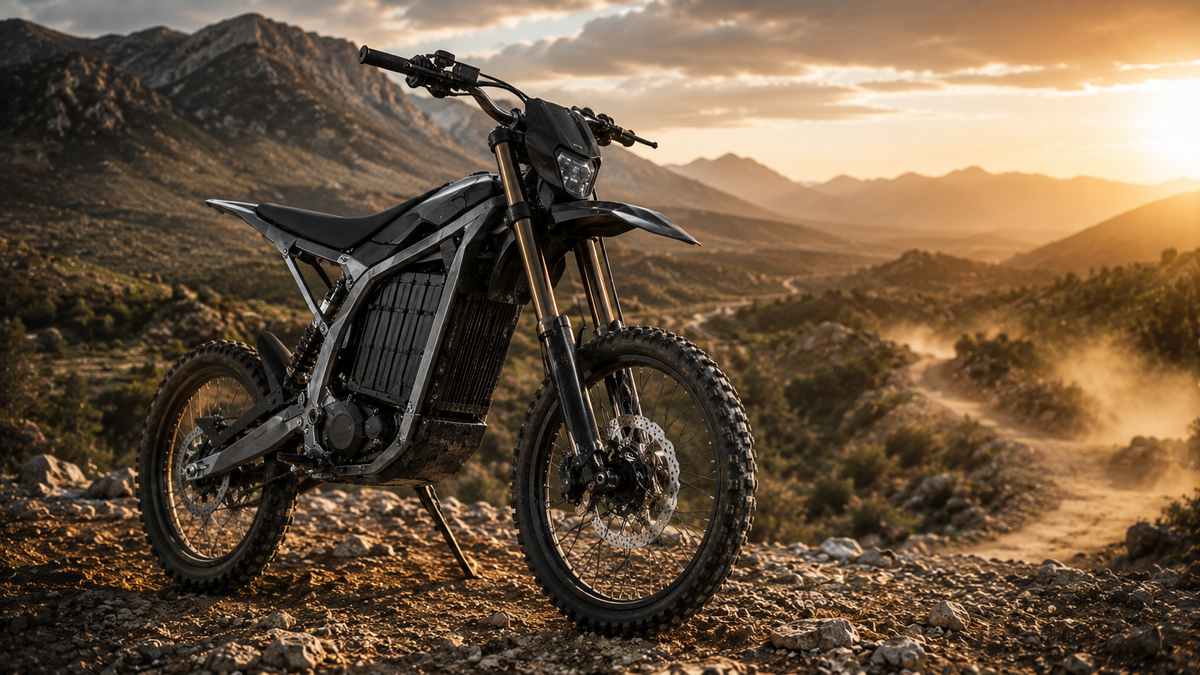
79Bike Falcon Pro Review: Specs, Performance, Pros, Cons & Who It’s For

The 79Bike Falcon Pro sits in one of the most competitive parts of the electric dirt bike market.
It isn't an entry-level e-bike with dirt tires, and it isn't trying to be a full-size electric motorcycle. Instead, it combines a relatively lightweight e-moto chassis with a 72V power system, long-travel suspension, strong torque, and a published top speed well above conventional Class 1, 2, or 3 e-bikes.
For riders comparing the Falcon Pro against bikes such as the Sur-Ron Light Bee X, Talaria Sting R, or even higher-powered 79Bike models, the real question isn't whether the Falcon Pro is powerful.
It is.
The better question is whether its particular balance of power, weight, battery capacity, suspension, and price makes sense for the way you plan to ride.
In this 79Bike Falcon Pro review, we'll break down exactly where the bike stands out, where it gives something up, and who we think should put it near the top of their shortlist.
79Bike Falcon Pro: Quick Verdict
The Falcon Pro is one of our strongest all-around choices for riders who want serious 72V electric dirt bike performance without stepping into a heavier 16–17kW flagship platform.
Its published setup combines:
- 10,000W peak power
- 72V 35Ah LG lithium battery
- Up to 56 mph published top speed
- Up to 75 miles of manufacturer-rated maximum range
- 410 N·m published torque
- Approximately 130 lb bike weight
- Fastace 2.0 inverted front fork
- Fastace rear shock
- 19-inch front and rear off-road tires
- Approximately 3–4 hour published charging time
- NFC unlocking and upgraded digital dashboard
What makes that combination interesting is not any one specification.
It's the overall balance.
There are lighter electric dirt bikes.
There are more powerful electric dirt bikes.
There are also larger battery platforms.
But relatively few combine this level of published performance with a roughly 130-pound chassis.
Our Verdict
Best for: Riders who want a high-performance 72V e-moto with substantial power and range without moving into the heavier flagship class.
Skip it if: You're a complete beginner, prioritize ultra-light trail handling above power, or specifically want the highest-output electric dirt bike available.
79Bike Falcon Pro Specifications
| Peak Power | 10,000W |
| Battery | 72V 35Ah LG lithium |
| Approx. Battery Energy | 2,520Wh |
| Published Top Speed | Up to 56 mph |
| Published Max Range | Up to 75 miles* |
| Published Torque | 410 N·m |
| Weight | Approx. 130 lb |
| Seat Height | Approx. 32.7 in / 830 mm |
| Front Suspension | Fastace 2.0 inverted fork, 200 mm travel |
| Rear Suspension | Fastace rear shock |
| Tires | 19 / 19 in off-road |
| Charge Time | Approx. 3–4 hours |
*Published speed and range figures are maximum manufacturer figures. Actual results vary significantly with rider weight, terrain, elevation, temperature, tire pressure, riding mode, throttle use, and other conditions.

What Makes the Falcon Pro Stand Out?
1. 10,000W Peak Power Without a 150+ lb Platform
One of the Falcon Pro's biggest advantages becomes clearer when you compare it with higher-end e-motos.
The Falcon Pro publishes up to 10,000W peak power while weighing approximately 130 pounds.
By comparison, moving into some 16–17kW electric dirt bikes can push total bike weight closer to the 150-pound range.
Twenty pounds may not sound enormous on a spec sheet, but it can matter when:
- Maneuvering through technical terrain
- Recovering the bike after a drop
- Loading or unloading it
- Changing direction at lower speeds
- Transporting the bike between riding locations
That is one reason we consider the Falcon Pro more of an all-around performance option than simply another high-wattage bike.

2. The 72V 35Ah Battery Is Substantial
The Falcon Pro uses a 72V 35Ah LG lithium battery.
That works out to approximately:
72V × 35Ah = 2,520Wh
of theoretical battery energy.
That's a substantial pack for a bike in this weight class.
It also helps explain why 79Bike can publish a maximum range figure of up to 75 miles under favorable conditions.
However, riders should not interpret that figure as guaranteed off-road range.
High-speed riding, steep climbs, soft terrain, hard acceleration, rider weight, and temperature can all reduce range significantly.
The best way to interpret maximum range is as a comparison metric rather than a promise.

3. Fastace Suspension Is a Meaningful Part of the Package
A 50+ mph electric dirt bike needs more than a powerful motor.
The Falcon Pro uses a Fastace 2.0 inverted front fork offering approximately 200 mm of travel along with compression and rebound adjustment.
It is paired with a Fastace rear shock.
For riders actually using the bike away from smooth pavement, suspension quality matters because it affects:
- Front-end control
- Traction
- Stability
- Comfort over repeated impacts
- How confidently the bike handles rough terrain
That's especially important as speed and bike weight increase.

4. 19/19 Wheels Keep the Bike Predictable
The Falcon Pro uses a 19-inch front and 19-inch rear off-road wheel setup.
A same-size front and rear configuration gives the bike a straightforward, balanced layout.
Riders looking for a more motorcycle-inspired staggered wheel configuration may prefer another model, but the Falcon Pro's setup fits its goal of remaining relatively compact and manageable.
5. NFC Unlocking and Digital Controls Add Convenience
79Bike also gives the Falcon Pro some modern touches beyond the core mechanical package.
The updated dashboard provides additional riding information, while NFC unlocking allows compatible tap-to-start functionality.
There is also a neutral mode designed to make parking and stationary handling easier.
None of these features should determine your entire purchase decision—but on a premium e-moto, they are useful additions.

How Fast Is the 79Bike Falcon Pro?
79Bike publishes a maximum speed of up to 56 mph for the Falcon Pro.
That puts the bike firmly outside the performance territory of conventional commuter e-bikes.
But published top speed should always be treated as a maximum rather than something every rider will reproduce.
Actual speed can be affected by:
- Rider weight
- Battery state of charge
- Terrain
- Elevation
- Tire setup
- Temperature
- Configuration
More importantly, a bike capable of approximately 56 mph should be treated as a serious performance machine.
Appropriate protective equipment and riding experience matter.
What Kind of Range Can You Expect?
79Bike publishes a maximum range of up to 75 miles.
That figure is useful for comparing the Falcon Pro with other bikes, but aggressive off-road riding can produce dramatically different results.
Think of range as a spectrum.
Higher range:
- Moderate speeds
- Flatter terrain
- Smoother throttle inputs
- Lower rider/cargo load
Lower range:
- Repeated full-throttle acceleration
- High sustained speeds
- Steep climbs
- Loose or technical terrain
- Heavier riders
- Cold conditions
If maximum distance is critical to your use case, plan conservatively rather than planning around the headline number.
79Bike Falcon Pro Pros
- Strong 10kW peak power without jumping into the heaviest flagship category
- 72V 35Ah LG battery with approximately 2.52kWh of theoretical capacity
- Up to 56 mph published top speed
- Up to 75 miles published maximum range
- Approximately 130-pound weight is relatively manageable for this performance level
- Fastace suspension front and rear
- Adjustable front suspension
- NFC unlocking and upgraded digital dashboard
- 19/19 off-road wheel setup
- 3–4 hour published charging time
79Bike Falcon Pro Cons
- Not an entry-level machine. The available power deserves experience and respect.
- 130 pounds is still substantial. Riders coming from bicycles or ultralight e-motos will notice the weight.
- Not the most powerful option available. Falcon GT and Rerode R1+ buyers can move into roughly 16–17kW peak territory.
- Published maximum range is not guaranteed real-world range. Hard off-road riding can reduce it considerably.
- High-performance e-motos may not qualify as ordinary street-legal e-bikes. Always verify local laws before riding on public roads.
79Bike Falcon Pro vs Sur-Ron Light Bee X
The Sur-Ron Light Bee X is one of the most natural alternatives shoppers compare against the Falcon Pro.
The Sur-Ron has a major advantage in one area: ecosystem maturity.
It has been on the market longer and has developed an enormous community, aftermarket, and modification ecosystem.
The Falcon Pro's argument is different.
It offers a modern 72V architecture, large battery, substantial published torque, and up to 56 mph of manufacturer-rated speed in its stock configuration.
So the decision starts to look like this:
Consider the Falcon Pro if:
- Stock performance matters heavily
- You want a 72V platform
- Battery capacity and range matter
- You want approximately 10kW peak output without immediately modifying the bike
Consider a Sur-Ron Light Bee X if:
- Aftermarket depth is one of your biggest priorities
- You prefer a more established platform
- You specifically want a lighter, highly customizable e-moto
We'll cover this matchup in much greater detail in our dedicated Falcon Pro vs Sur-Ron Light Bee X comparison.
Falcon Pro vs Falcon GT: Should You Spend More?
The Falcon GT is the more extreme machine.
It moves into roughly 16kW+ peak output, a 72V 40Ah battery, higher published torque, and approximately 59 mph top-speed territory.
But it also becomes a larger and heavier platform.
For many riders, the question isn't whether the Falcon GT is objectively more powerful.
It is.
The question is whether you will actually benefit from that additional performance enough to justify moving away from the Falcon Pro's lighter package.
Falcon Pro: Better all-around balance.
Falcon GT: Better if maximum performance is the goal.

Who Should Buy the 79Bike Falcon Pro?
We think the Falcon Pro makes the most sense for riders who:
- Already have some riding experience
- Want substantially more performance than a normal e-bike
- Want a 72V electric dirt bike
- Value a balance between weight and power
- Ride trails, private property, dirt roads, or off-road terrain
- Want strong stock performance without immediately planning major upgrades
- Want a premium electric dirt bike without moving into the heaviest flagship class
Who Should Skip the Falcon Pro?
Another bike may make more sense if:
- This will be your first experience with any motorized two-wheel vehicle
- Your highest priority is keeping bike weight as low as possible
- You only need a conventional commuter e-bike
- You specifically want maximum 16–17kW-class performance
- You need a vehicle that clearly conforms to conventional Class 1, 2, or 3 e-bike rules
Is the 79Bike Falcon Pro Worth It?
For the right rider, yes.
The Falcon Pro's biggest strength is not that it wins every specification comparison.
It doesn't.
Its strength is that it combines several desirable characteristics without pushing too far toward either extreme:
- 10,000W peak power
- 72V architecture
- Large 35Ah battery
- Approximately 130-pound weight
- Fastace suspension
- 56-mph-class published performance
That's why we selected it as our Best Overall Electric Dirt Bike in our 2026 electric dirt bike buying guide.
Someone chasing maximum power may prefer the Falcon GT or Rerode R1+.
Someone prioritizing price may prefer something such as the HappyRun G300 Pro.
But for a rider trying to balance power, battery, weight, suspension, and overall usability, the Falcon Pro makes a compelling case.
Frequently Asked Questions
How fast does the 79Bike Falcon Pro go?
79Bike publishes a maximum top speed of up to 56 mph. Actual speed varies with rider weight, terrain, battery charge, environmental conditions, and configuration.
How much power does the Falcon Pro have?
The Falcon Pro is rated at up to 10,000W peak power.
What battery does the 79Bike Falcon Pro use?
It uses a 72V 35Ah LG lithium battery, equivalent to approximately 2,520Wh based on voltage multiplied by amp-hour capacity.
How much does the 79Bike Falcon Pro weigh?
Published bike weight is approximately 130 pounds.
What is the Falcon Pro's range?
79Bike publishes a maximum range of up to 75 miles. Real-world range can be much lower during aggressive or high-speed riding.
Is the Falcon Pro better than a Sur-Ron?
Neither bike is automatically better for every rider. The Falcon Pro makes a strong case on stock power, voltage, battery capacity, and published speed, while Sur-Ron has advantages including a mature aftermarket ecosystem and widespread community support.
Is the 79Bike Falcon Pro street legal?
Do not assume the Falcon Pro qualifies as a conventional street-legal e-bike. High-performance electric dirt bikes can fall outside standard e-bike classifications. Check current state and local laws before using one on public roads.

Shop the 79Bike Falcon Pro
If the Falcon Pro matches the kind of riding you're planning, explore current configurations, specifications, purchase options, and availability below.
Still comparing?
Explore All Electric Dirt Bikes →
Or use WattWheelz's Find My E-Bike experience to narrow down the best ride based on your budget, terrain, range requirements, and riding style.
Last updated: August 2026. Specifications and availability may change. Published speed, torque, power, charging, and range figures are manufacturer specifications and should not be interpreted as guaranteed real-world performance.
For a direct competitor comparison, continue with our 79Bike Falcon Pro vs Sur-Ron Light Bee X comparison.