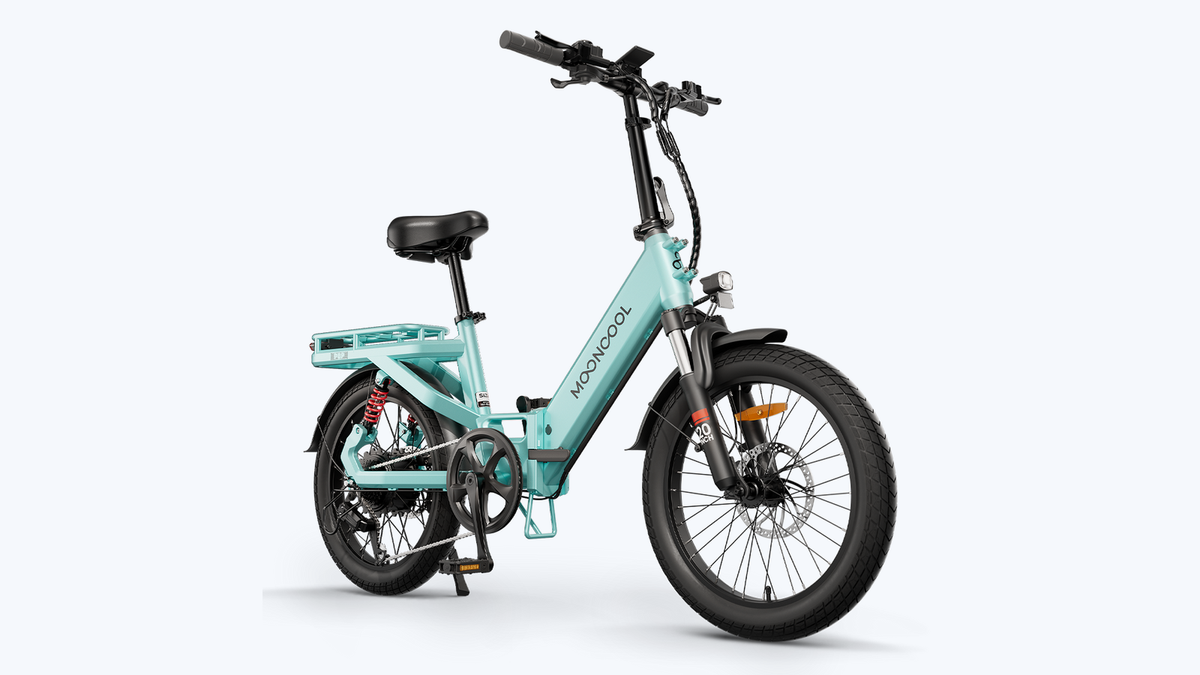
An e-bike can fill a gap between walking, public transport, and driving. The useful question is which part of your day it can simplify: the trip to a station, a short errand, or a ride across town. Start with those journeys before selecting a frame or battery.

Identify the trips that fit
List the short trips you make repeatedly, their distances, and what you carry. A shopping trip and a station connection may need very different setups. Compare the route, parking arrangements, and carrying requirements for each. A bike should make the whole journey easier, including the part after you arrive.
Check transit policies before choosing a folding bike
Do not assume that folding makes every bike acceptable on a train or bus. Check the operator's current rules for bicycles, batteries, size, and peak-hour travel. Record the folded dimensions and total weight of the exact model, then compare them with the permitted limits and what you can comfortably lift.
If you are considering a compact setup, our Urtopia full-size versus folding comparison gives you a specific comparison to explore. Verify current product details before choosing.
Measure the storage space
Measure the doorway, lift, stair landing, and actual parking area. A bike may fit the final storage spot but still be awkward to move through the building. Check whether you can turn it around without lifting it, and whether handlebars or pedals obstruct access.
For shared buildings, confirm the applicable storage and charging policies. Use the manufacturer's charging instructions and the supplied or approved charger. A removable battery can change the routine, but it does not remove the need for a suitable charging location.
Plan parking at both ends
Identify where you can securely park at home and at the destination. Budget for suitable security equipment and check any insurance requirements that apply to your own policy. If the destination has no suitable parking, a different route or transport combination may work better.
Match cargo to the task
Think about your regular bag, groceries, and work equipment. Check the manufacturer's rack and total-load limits, as well as compatibility for any accessory. Do not assume that an extended seat or rear platform is approved for a passenger.
Compare cargo electric bikes when carrying is central to the journey, and folding electric bikes when compact storage is the priority.
Build a flexible travel routine
You do not have to replace every trip to get value from an e-bike. Combine the journeys that work well with a backup for unsuitable conditions. For a work route, use our e-bike commuting checklist; if you are still weighing the purchase, see e-bike benefits and trade-offs.
Urban mobility questions
Can I bring an e-bike onto any train?
No general assumption is safe. The operator may restrict size, battery type, time of travel, or bicycles entirely. Check the current rules for the service you use.
Is a folding bike always easier to carry?
Folding reduces dimensions, but weight and lifting grip still matter. Check both the folded size and how you will move it.
Should I buy before measuring my storage space?
Measure first, including the route into the space. Storage and handling can eliminate otherwise appealing models from your shortlist.
Sources & Verification
Editorial planning guidance reviewed October 24, 2026. Linked Watt Wheelz product listings and guides provide model-specific buying context. Confirm specifications, approved accessories, maintenance, and charging against the exact manufacturer's current manual. No independent road or winter test is claimed.